-
U.S. Office Address: 2319 S.W. 29 Ave., Miami, Fl. 33145
U.S.Mailing Address: 2520, Coral Way, Suite 2014, Miami, FL 33145
U.S. Number: 754-368-2330

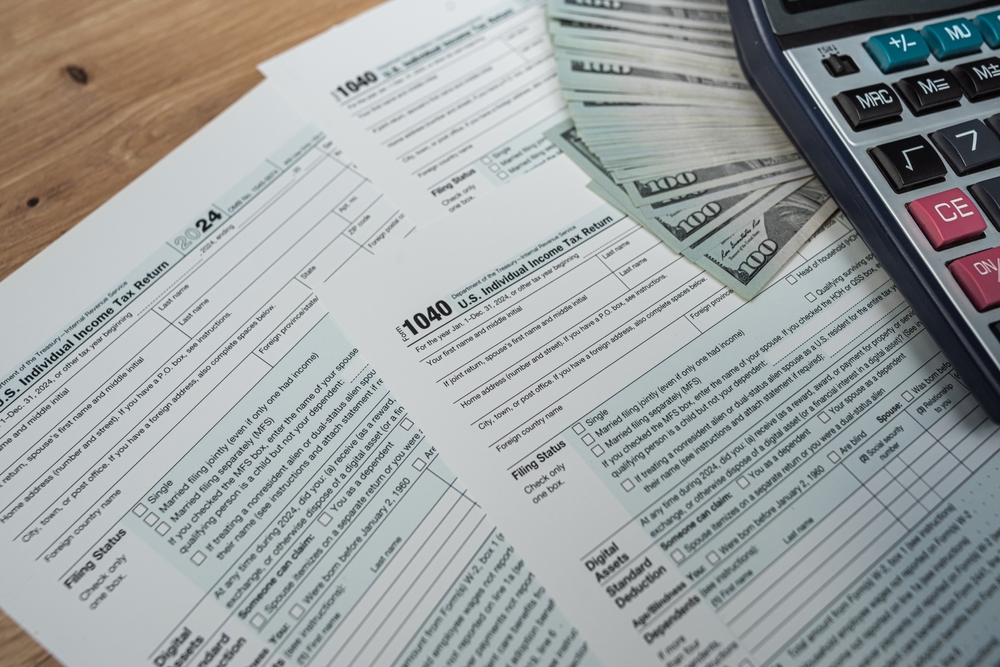
Selling real estate in the United States is a major milestone, but for non-resident foreign investors, it comes with a complex legal roadblock known as FIRPTA (Foreign Investment in Real Property Tax Act). Many international owners are shocked to discover that a massive chunk of their hard-earned money disappears instantly at the closing table due to mandatory withholding requirements. Understanding the process of FIRPTA tax filing for foreign investors in the USA can help property sellers manage their obligations and take the right steps toward recovering eligible funds.
If you are a non-U.S. citizen, an expat, or a foreign corporation selling a U.S. property, understanding your tax filing requirements is not just about compliance; it is about rescuing your cash from the Internal Revenue Service (IRS). Proper filing can help determine your actual tax liability and whether you qualify for a refund of excess FIRPTA withholding.
At Firpta Tax Returns, the complexities of FIRPTA are simplified into plain, actionable advice so foreign investors can complete their filing requirements accurately and work toward reclaiming what is rightfully theirs.
FIRPTA is not actually a separate tax. Instead, it is a strict withholding mechanism designed by the IRS to guarantee that foreign individuals pay their U.S. capital gains taxes before moving funds out of the country.
When a foreign person sells a U.S. real property interest (USRPI), the buyer is legally obligated to act as a withholding agent. The buyer must withhold 15% of the gross sales price—not your profit, but the total sale amount—and remit it directly to the IRS within 20 days of closing using Form 8288 and Form 8288-A.
The Gross Price Trap: If you sell an investment property for $600,000, the buyer must withhold $90,000 at closing. It does not matter if you only made $20,000 in actual profit or even if you sold the property at a financial loss. The IRS holds the $90,000 as a massive security deposit until you prove your actual tax liability.
You do not always have to let the IRS sit on a massive portion of your equity for months. There are standard exemptions and advanced pathways to lower or entirely eliminate this withholding requirement.
If the buyer intends to use the property as a primary residence (living there at least 50% of the time for the first two years), the withholding rate may drop based on the transaction value:
If your actual capital gains tax liability is significantly less than the 15% withholding amount, you can submit Form 8288-B (Application for Withholding Certificate) to the IRS on or before the closing date. This application requests authorization to withhold a lower amount—or nothing at all—based on your actual calculated profit margin. While the application is pending, the closing escrow agent holds the 15% in limbo rather than sending it to the IRS, preserving a faster path to liquidation once approved.
To get your over-withheld funds back from the IRS, you must complete a formal post-closing tax filing process. The money will not be returned to you automatically.
You cannot process a U.S. tax return without a valid identification number. Foreign individuals must apply for an Individual Taxpayer Identification Number (ITIN) via Form W-7, while foreign entities require an Employer Identification Number (EIN).
After closing, the buyer sends the withheld funds to the IRS. The IRS processes this and mails a stamped Copy B of Form 8288-A back to you. This stamped copy acts as official proof that your tax deposit is sitting in an IRS account.
Determine your precise net profit. Take your gross sales price and subtract your original purchase price, closing costs from both buying and selling, and documented capital improvements (renovations, structural repairs).
File your formal return—typically Form 1040-NR for individuals or Form 1120-F for foreign corporations—in the early months of the calendar year following your sale. You will report the sale, calculate the small tax owed on your actual net profit, apply the 15% withheld amount as a paid credit, and claim the massive remaining balance as a direct refund.
Navigating cross-border real estate transactions requires precision. Leaving thousands of dollars trapped in federal escrow due to missed deadlines or incorrect forms can severely fracture your investment liquidity. Partnering with professional international tax accountants ensures that your paperwork is flawless, your exemptions are maximized, and your financial recovery is expedited.
So, for seamless preparation of your withholding certificates and non-resident filings, trust the leading experts providing elite FIRPTA tax return services in the USA to safeguard your capital. Contact Firpta Tax Returns today to initiate your refund process.
1. I am selling my U.S. property at a net loss. Do I still have to pay FIRPTA withholding?
Yes. FIRPTA withholding is calculated directly from the gross sales price, completely separate from your profit margins. Even if you lose money on the sale, the buyer is legally obligated to withhold the standard 15% unless you proactively apply for an IRS Withholding Certificate (Form 8288-B) on or before the day of closing to prove your zero-tax status.
2. How long does it take the IRS to process a FIRPTA tax refund?
If you wait to claim your refund by filing a standard Form 1040-NR the following year, it typically takes the IRS 6 to 9 months from the date of filing to issue your physical check or electronic direct deposit. If you utilize a Form 8288-B Withholding Certificate at closing, the escrow agent can often release the excess funds to you within 90 to 120 days of IRS approval.
3. Are green card holders or foreign expats living in the U.S. subject to FIRPTA?
FIRPTA only applies to “foreign persons.” Under IRS rules, if you hold a valid Green Card or pass the Substantial Presence Test (proving you lived in the U.S. for a specific number of days over a three-year period), you are classified as a resident alien for tax purposes. Resident aliens are exempt from FIRPTA withholding but must still report the sale on a standard domestic tax return.
4. Can I use a 1031 exchange to defer my FIRPTA withholding tax?
Yes, but it is not automatic. A 1031 exchange allows real estate investors to defer capital gains taxes by reinvesting proceeds into a “like-kind” U.S. property. However, to bypass the automatic 15% closing withholding, a foreign seller must successfully file Form 8288-B alongside strict 1031 documentation at the time of the sale to notify the IRS of the legal tax deferral.
5. What happens if the buyer fails to withhold the 15% FIRPTA tax?
If a foreign investor sells a property and the buyer fails to collect and remit the 15% withholding, the buyer can be held personally liable by the IRS for the entire uncollected tax amount, plus compounding interest and severe statutory penalties. This is why closing attorneys and title companies strictly enforce FIRPTA rules at the settlement table.